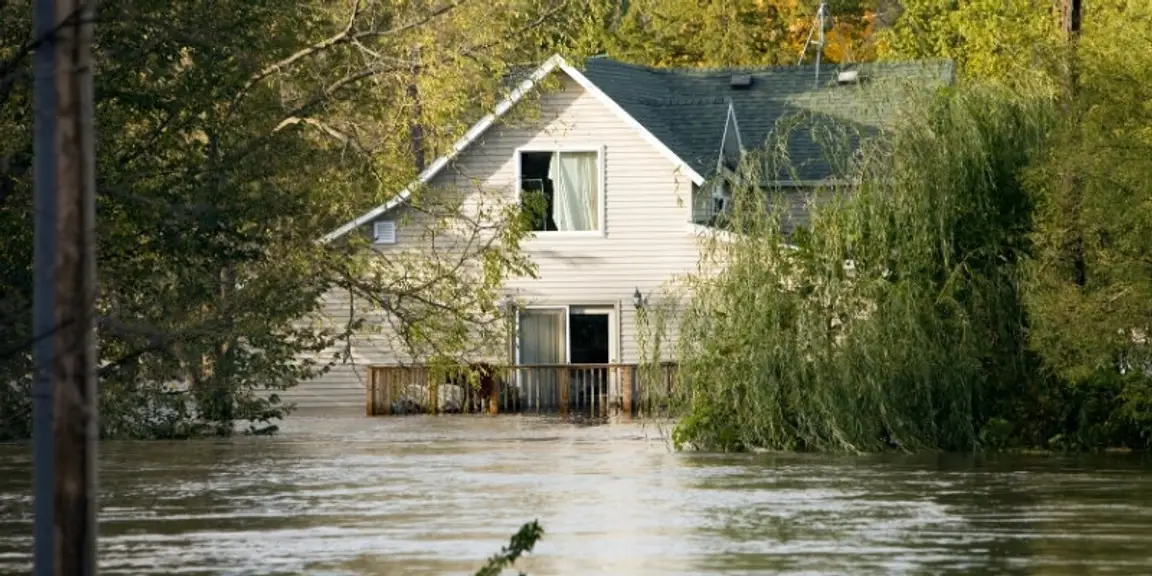

Water was still in the crawl space when the listing went live. It happens more often than most real estate guides would have you believe, and the result is almost always the same: the house sits, the price drops, and the seller ends up in a worse position than if they’d had a real plan from day one. Selling a flooded home is absolutely doable. Your path just looks different than a standard sale, and pretending otherwise wastes everyone’s time.
How to Sell a Flooded House: 3 Options for Homeowners

Most sellers have more options than they think, and fewer of those options require spending a fortune before closing.
A couple of weeks ago, I worked with the Kim family out of Beaumont, Texas. They’d inherited their mother’s house, a place packed with thirty years of belongings, and none of the three siblings lived nearby. Twice in two years, the house had taken on water, once from a bayou backup and once from a slow roof leak that soaked the back bedroom drywall panels clear through. Stuffed into the garage were a rusted chest freezer and bags of potting soil the siblings couldn’t identify. They didn’t want a renovation project. They wanted a clean exit.
Their situation is common. Three basic paths exist for a flooded home:
Repair and list with an agent. You fix what flooded, get inspections done, price competitively, and find a conventional buyer. This route gets you the highest price but requires capital upfront and takes the most time. Buyers using a conventional mortgage will need the home to pass appraisal and inspection, so deferred flood damage isn’t an option (even minor moisture issues are flagged).
Sell as-is to an investor or cash buyer: no repairs, no staging, no open houses. You take a price that reflects the current condition and close fast. For people in the Kim family’s position, this path made the most sense because the alternative was months of contractor bids and uncertainty. Ready House Buyer handles exactly this kind of purchase, and we can walk you through what a fair cash offer looks like for a flood-affected property without any pressure to sign on the spot.
Partial repair, then list. Address the mold and the structural issues, and leave cosmetic damage to the buyer as a negotiating credit. This middle path works when you have limited cash but want some return beyond pure land value.
Your right call depends entirely on your timeline, your finances, and the extent of the damage. Flood damage ranges from wet carpet to a compromised foundation, and those are not the same conversation.
What Is a Flooded House Worth? Pricing After Water Damage
A seller in Houston called me after getting a traditional market evaluation that felt off. Her agent had priced the house at full neighborhood value, which seemed generous, until her first showing produced a buyer who immediately asked about flood history and walked when she disclosed it (first showing, gone just like that).
The gap between perceived value and actual buyer behavior is the whole story with flooded properties. In cases of natural disaster flooding, the extent of the damage, the property’s flood history, and associated risk factors can result in a value reduction ranging from 20% to 30%. On a $300,000 house, you could be looking at $60,000 to $90,000 in lost value before you spend a dollar on repairs (and that’s before carrying costs).
The size of that devaluation depends on the home’s location in a flood-prone area, whether the flood was an isolated incident, and the availability and cost of flood insurance in the area.
I’ve seen sellers price as though their one flood event was an anomaly, only to watch buyers do their own research and come in with low offers or walk away altogether. Flood history follows the property title. Buyers know that, especially buyers represented by experienced agents.
Pricing a flooded home isn’t just about what you put into repairs. It’s about what the buyer sees when they pull up the flood map, review the insurance quotes, and consider resale. Price it honestly from the start, and your negotiating position is stronger. Try to price through the damage, and you’ll spend months watching your listing sit while your actual net proceeds shrink.
Flood Zone vs. Flood History: How Each Affects Your Sale Price
Flood zone designation and actual flood history are two separate things, and buyers constantly confuse them. A home can sit inside a Special Flood Hazard Area and never flood. A home outside the designated flood zone can be flooded twice. Both facts show up differently to lenders and insurance companies, and that distinction changes who can buy your house.
Federally regulated and federally insured mortgage lenders are required to make buyers carry flood insurance if the home is in a Special Flood Hazard Area, which covers properties with a high-to-extreme flood risk. The mandatory purchase requirement filters out buyers who weren’t planning on that extra annual expense. As of 2025, the national average flood insurance cost is about $1,064 per year through the federally backed National Flood Insurance Program, close to an extra $90 a month on a buyer’s already stretched budget.
Under the NFIP’s Risk Rating 2.0 system, flood insurance premiums are now based on an individual property’s specific flood risk and flooding history rather than a general category based on location and type. This matters for sellers because a buyer who assumes they’ll pay what you paid is likely wrong. Transparently sharing current insurance quotes helps the sale stay together through the negotiating phase.
Communities that participate in FEMA’s Community Rating System can earn NFIP discounts ranging from 5% to 45% on flood insurance premiums. If your property sits in one of those communities, that’s a genuine selling point worth highlighting early to buyers.
Nearly 4 million single-family homes in the U.S. sit in floodplains, and a 2021 Stanford-led study found they’re collectively overvalued by close to $44 billion. Buyers are becoming more aware of this, particularly younger buyers who research flood maps before they ever request a showing.
Elevation Certificates: What They Cost and Why Buyers Need One
“I already know my house flooded. Why would I pay for a certificate that just confirms that?” Fair question. The elevation certificate does more than confirm flood exposure; it sets the insurance rate your buyer will actually pay.
An elevation certificate is an official document prepared by a licensed surveyor that records your home’s elevation relative to the base flood elevation (BFE) on FEMA’s Flood Insurance Rate Maps. If your home sits above the BFE, the buyer’s flood insurance premiums drop. If you’re below it, they go up. The number directly affects how much house the buyer can afford to buy from you.
Getting the certificate typically costs between $600 and $2,000, depending on your area and the complexity of the survey. That feels steep until you realize it can mean the difference between a buyer qualifying for a loan or not, or between insurance premiums that are manageable versus ones that kill the sale in underwriting (elevation readings move premiums dramatically).
I’ve bought houses where the seller had no idea their elevation certificate was out of date. The buyer’s lender flagged it during underwriting, the sale paused for three weeks while a new survey was ordered, and the sellers lost a buyer who got cold feet during the delay. An updated certificate at the start keeps the transaction moving.
Sellers in Special Flood Hazard Areas should obtain this document before listing. If you don’t have one on file, contact a local licensed surveyor or check with your local floodplain administrator. The FEMA Flood Map Service Center is also a useful starting point for understanding your property’s current designation before you invest in a survey.
Flood Damage Repairs That Actually Increase Resale Value

Skipping mitigation work on a flooded house and listing it at full price is not a strategy. It’s a way to collect low offers from investors while conventional buyers with financing keep their distance.
The repairs that actually move the needle are those that reduce future flood exposure, not just those that make the house look clean. Elevated utilities are one of the most buyer-friendly improvements you can make. Moving the water heater, electrical panel, and HVAC equipment above potential flood levels addresses one of the top concerns buyers and their insurers raise, which, in my experience, is often what kills a sale at the financing stage. Homes with elevated mechanicals often qualify for lower insurance premiums, which makes the monthly cost of ownership easier for buyers to stomach.
Flood vents, also called crawlspace vents, let water flow through rather than pool against the foundation. FEMA recognizes properly installed flood vents as a mitigation feature that can reduce insurance premiums. If your home has a crawl space, and especially if floodwaters reached it, this is a relatively affordable fix (installers can usually complete it in a day) with an outsized impact on how lenders and insurance companies assess the property.
Waterproofing the basement matters too. Costs vary widely depending on the approach (interior drainage systems are cheaper, exterior excavation is expensive), but even an interior drainage system with a sump pump signals to buyers that someone took the flood history seriously.
What won’t help much: fresh paint over flood-damaged drywall panels, replacing flooring without addressing subfloor moisture, and cosmetic staging that obscures structural issues. Buyers schedule inspections, and their inspectors find issues. Trying to paper over flood damage consistently costs sellers more in price reductions and repair credits than the cosmetic work cost to begin with.
Mold Remediation and Clearance Certificates: Do They Add Value?
Mold remediation is where the emotional difficulty of a flooded home sale gets very real. You’ve already dealt with the flood. Now you’re tearing out walls, pulling up subfloor, and paying contractors to treat a problem you can’t see but a buyer’s inspector will absolutely find.
Getting a professional mold clearance certificate after remediation does add value, specifically because it removes one of the biggest contingency risks buyers face when purchasing a flooded property. Without clearance documentation, buyers and their lenders often require escrow holdbacks or price reductions that exceed the cost of professional remediation.
Remediation before selling is not required. You can sell a property with known mold as-is, with full disclosure. Cash buyers, including real estate investors, regularly purchase mold-affected properties because they have contractor relationships and experience handling them. What you can’t do is conceal it. Disclosure laws in most states require you to inform buyers of known material defects, and mold following flood damage almost always qualifies as one.
The practical reality: remediation before listing makes the pool of buyers larger and includes buyers who need conventional financing. Selling as-is keeps your upfront costs at zero but narrows the field to cash buyers, which isn’t inherently bad; it just shifts your pricing conversation. At Ready House Buyer we purchase homes with mold damage and include it in our fair-value assessment rather than treating it as an automatic disqualifier.
How to Offset Flood Insurance Costs for Your Buyer
A buyer got pre-approved, loved the house, and then got the flood insurance quote. The premium came in at over $3,000 a year, pushing her total housing cost well beyond her budget. She called her agent and said she needed to think about it. She pulled out two days later.
That scenario plays out constantly with flood zone properties, and sellers who anticipate it close more sales than those who don’t. One concrete option: offer a seller concession at closing that covers one or two years of flood insurance premiums. On a $250,000 sale, a $2,500 to $5,000 concession built into the sale keeps a buyer in place through the cost of that first premium and gets priced into your net proceeds cleanly rather than dragging out as a re-negotiation.
Another option is to buy down the insurance costs through property improvements before listing. Elevation certificates, flood vents, and elevated utilities all feed into how insurance companies calculate premiums for the buyer. A house that comes with documented mitigation work gives buyers a clear path to lower insurance costs without relying on seller concessions, keeping your negotiation conversations cleaner.
Are you pricing the property without factoring in the buyer’s insurance cost? That’s the gap most sellers miss. A buyer’s total monthly payment includes their mortgage, their hazard insurance, and their flood insurance premium. If the combined payment exceeds what they qualify for, the sale dies, regardless of how much they love the house.
Who Buys Houses With Flood Damage? 4 Buyer Types
Who’s going to buy a house with a history of flooding? It’s the question every seller in this situation asks, usually staring at a listing that hasn’t moved in sixty days.
The buyer pool is bigger than most sellers expect. Flooded homes attract four main categories: cash investors who specialize in distressed properties, owner-occupants willing to accept the flood risk at a price, buyers who specifically want a home in that neighborhood and understand what they’re getting into, and developers or builders who may be more interested in the lot than the structure.
The mix shifts depending on the condition. A flooded house that’s been fully remediated draws a much wider audience, including buyers using conventional financing. A home with active mold, a history of standing water in the crawl space, or structural issues attracts primarily cash buyers. That’s not a problem; it’s just a smaller market, so pricing needs to reflect it.
One thing I keep seeing: sellers who try to market a flooded home through a traditional process end up generating multiple rounds of negotiations and inspection addenda, yet the same property sold to a cash buyer closes cleanly in two to three weeks. Neither outcome is universally right. Your situation determines what you actually need.
If you want to understand what a cash offer looks like for your specific property, Ready House Buyer works with homeowners in exactly this situation and provides offers without making you fix anything first. As a company that buys houses in Texas, we work with sellers facing flood damage in markets across the state.
Real Estate Agent vs. Cash Buyer for a Flooded Home

For years, I defaulted to recommending people list with an agent first, even on distressed properties. I’ve seen enough sales collapse to revise that view.
Listing with a real estate agent makes sense for a flooded home that has been fully repaired, properly documented, and priced accurately. The agent earns their commission by reaching a wider pool of buyers and negotiating on your behalf. With a completely remediated home, an elevation certificate, and mold clearance documentation in hand, the traditional listing process works well, and I’ve seen it close faster than sellers expect.
The calculus changes fast when the home still has active issues. Buyers using conventional mortgage financing need the property to pass an appraisal, so even minor unresolved flood damage can kill a sale before closing. Sales fall through at a rate that experienced investors in distressed real estate know well. Your listing sits, carrying costs accumulate, and you negotiate from a weaker position with each passing month.
Cash buyers accept properties in their current condition. The price reflects the damage, but there’s no financing contingency to blow up the sale, no lender-required repairs, and no appraisal that comes in low after you’ve already signed a contract. Closings on cash purchases typically occur in 2 to 3 weeks, rather than the 30 to 60 days a traditional sale requires.
Linh Delgado, a homeowner in Corpus Christi, Texas, found herself three months behind on her mortgage with an auction date already scheduled. Her house had taken on about eighteen inches of floodwater the previous spring, and she’d never gotten the damaged drywall panels replaced. Her insurance claim was still in dispute. An agent told her the property wasn’t listable in its current state. A cash buyer closed in 11 days, well before the auction date. She didn’t walk away with top dollar, but she walked away with her credit intact and money in her pocket.
That same math holds across Texas markets. If your flooded property sits in the Dallas area, cash house buyers in Dallas, TX can offer that same fast, no-repair closing without an auction date hanging over the process. Gulf Coast owners facing repeat flooding can get the same terms from cash home buyers in Houston, TX.
The choice between an agent and a cash buyer isn’t about which path is better in general. It’s about which path fits your timeline, your financial position, and the house’s actual condition.
Frequently Asked Questions
Before you make any moves, here are the questions sellers in this situation ask most, answered plainly.
Is It Hard to Sell a House in a Flood Zone?
It’s harder than selling a comparable home outside a flood zone, but it’s done every day. The main friction points are the mandatory flood insurance requirement for buyers using financed loans, the narrower pool of buyers who’ll accept the added insurance cost, and the disclosure requirements around flood history. Pricing the home accurately from the start and having your documentation ready, especially an elevation certificate, makes the process go considerably smoother.
When’s the Worst Time to Sell a Flooded House?
Right after a flood event in your area is the most difficult window, as buyer sentiment is low and your competition may include dozens of other flood-damaged homes hitting the market simultaneously. That said, waiting too long has its own cost: mold spreads, structural issues worsen, and carrying costs stack up. If your home needs to be sold, acting quickly with a realistic price is usually better than waiting for an ideal market moment that may not arrive.
What Should I Not Fix Before Selling a Flooded Home?
Cosmetic updates that don’t address underlying flood damage tend to waste money and can create disclosure problems. Fresh paint over damaged drywall, new flooring on a compromised subfloor, or landscaping while foundation issues remain unresolved all fall into this category. Spend on remediation, documentation, and structural integrity; skip the granite countertops and fresh landscaping. A cash buyer won’t pay more for cosmetic work on a flood-affected property, and a financed buyer’s inspector will see through it.
Do Sellers Have to Disclose Water Damage and Flood History?
Yes, in virtually every state. Flood damage and water intrusion history are considered material defects, and failing to disclose them exposes you to legal liability after closing. The specific disclosure requirements vary by state, so check your state’s disclosure form carefully or consult a real estate attorney. Some states require disclosing whether the property is in a Special Flood Hazard Area and whether you’ve made flood insurance claims. Getting this right protects you long after the sale closes.
Selling a flooded home takes more planning than a standard sale, but it’s not a dead end. Get your documentation together, know your options, and price with clarity. If you want to talk through what makes sense for your specific situation, contact us anytime. No pressure, no obligation, just a straightforward conversation about where you stand and what your options actually look like.
Helpful Texas Blog Articles
- Undisclosed Water Damage In Texas
- Do You Need A Deed To Sell Your House In Texas
- Sell an Investment Property in Texas
- Right to Remain in the Home During a Separation in Texas
- Selling Short and Buying Again in Texas
- Closing Costs Without Realtor in Texas
- Reclaim Abandoned Property in Texas
- Home Sale Contingency in Texas
- Selling Your Home to Pay Off Debt in Texas
- Divorce Property Appraisal in Texas
- Steps to Reclaim Abandoned Property in Texas
- Right to Remain in the Home During a Separation in Texas
- Divorce Property Appraisal in Texas
- Selling Inherited Property with Multiple Owners in Texas
- How to Sell an Inherited House in Texas