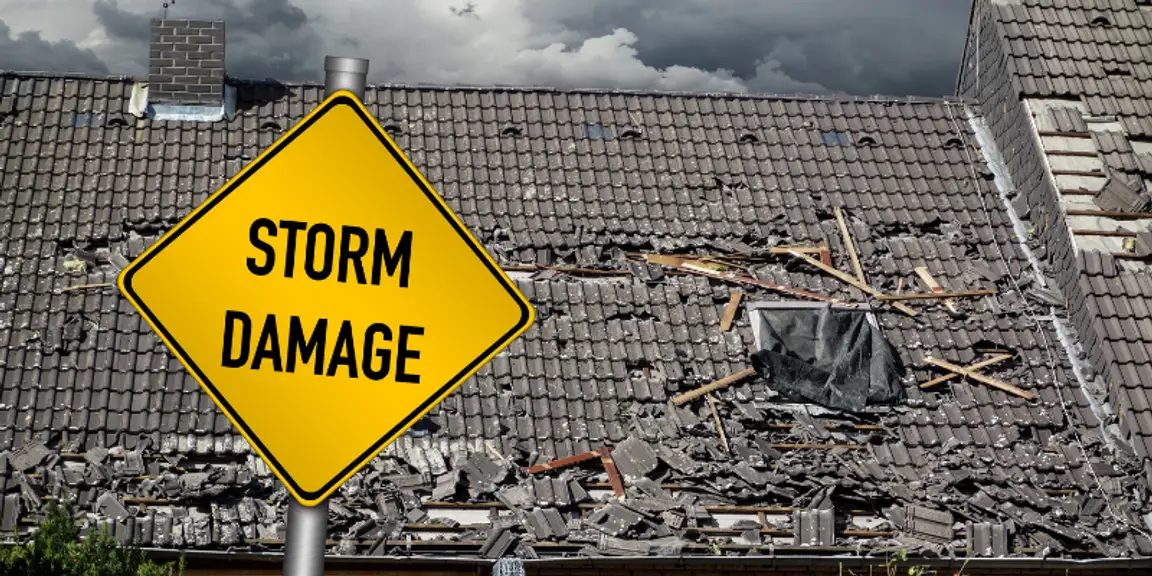

Hail the size of golf balls can cost you a buyer six months after the sky clears. Plenty of Texas homeowners learn that math when the roofer’s estimate and the appraisal land in the same week. Storm damage breaks more than shingles. It changes who will lend on your house, who will insure it, and how fast it moves off the market. I’ve walked plenty of properties in this state with tarps still strapped across the ridge line. The owners who came out ahead usually understood their choices before they picked up the phone. If you want to sell your house fast in Texas, those choices matter even more.
How Do Storms and Flooding Affect Texas Real Estate Values?
A while back an out-of-state heir asked me to look at her late father’s place in Dickinson. Two agent listings had expired back to back without a single offer. The roof had been tarped since a spring storm, and his fishing rods were still in the garage next to a chest freezer nobody wanted to open.
Uncertainty killed those listings more than the damage did. Retail buyers can’t price a mystery. They either walk or lowball hard enough to cover a worst case they haven’t measured.
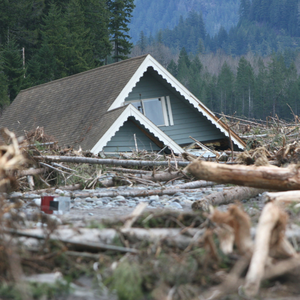
I see the same pattern across Texas. A damaged house rarely sells for market value minus the repair bill. It sells for market value minus the repair bill and the buyer’s fear. Fear gets expensive. It grows the longer a property sits.
Statewide, the market isn’t doing sellers any favors on timing. In its September 2026 housing update, the Texas Real Estate Research Center at Texas A&M reported a July median sales price of $339,000, flat against the year before. Flat prices mean buyers feel no urgency. Put a hail-beaten roof in a flat market and you’ve handed every shopper a reason to negotiate.
Speed matters too. Even houses in good shape can sit for weeks in today’s market. A storm-damaged house listed the usual way tends to sit longer, because the first contracts often fall apart at inspection or at the lender’s desk.
Financing is the quiet obstacle. Most lenders, FHA and VA included, won’t close on a house with an active roof leak or exposed sheathing, which shrinks your buyer pool to cash buyers and borrowers using renovation loans. Flood history narrows it further. A property that has taken water twice may be insurable only at a price that wrecks the buyer’s monthly payment.
Appraisers notice, too. They flag deferred maintenance, and the lender will often require repairs before funding. Now the seller is paying for work on a house they’re trying to leave.
Why Is Coastal Property in Texas a High-Risk, High-Reward Investment?
“Is my place three blocks off the bay still worth holding?”
I hear that from Rockport, Port Aransas, Surfside, and the west end of Galveston Island more than anywhere else. The honest answer depends on whether you can carry the insurance stack without flinching.
Owning on the Texas coast means stacking several policies on one house. Along the Gulf, your homeowners policy usually excludes wind and hail entirely. Wind coverage comes from a private carrier or from the Texas Windstorm Insurance Association (TWIA), and flood needs a separate policy altogether. TWIA’s own eligibility rules cover the 14 first-tier coastal counties plus parts of Harris County east of Highway 146. You also have to be turned down by at least one private insurer before TWIA will write you.
Three bills for one house. That’s the reality from Bolivar Peninsula down to South Padre. If you own in the Houston area and those bills don’t pencil out anymore, you can sell your Houston home for cash without fixing it first.
The reward side is real, and I won’t pretend otherwise. Short-term rental demand near the seawall, the Port A beaches, and Rockport’s harbor supports income that inland houses of the same size can’t touch.
Elevation is the line between a good coastal asset and a money pit. A pier-and-beam house built above base flood elevation with a current windstorm certificate sells to a wide audience. A slab-on-grade cottage that has taken surge twice sells to a narrow one, and every buyer in that narrow group expects a discount.
Would you buy your house today at your asking price, knowing the premiums? That one question settles many coastal debates.
After a named storm, the coastal market stalls for a season. Adjusters are backed up, contractors are booked, and buyers wait to see what repair bills look like across the whole neighborhood before they commit to one address. If you need out during that window, a traditional listing fights the current. Cash buyers who work the coast regularly, including our team at Ready House Buyer, can price storm risk directly. They don’t have to wait for a lender to bless it, and I’ve seen that save sellers months.
What Makes Texas Part of Tornado Alley’s Real Estate Market?
I used to treat tornado damage as a local problem for a handful of unlucky streets, and I was wrong.
Most of the money damage in North Texas comes from the hail and straight-line wind that ride along with the same storm systems. Those storms cross Denton, Garland, Rowlett, Arlington, and the whole I-35 corridor. One supercell can mark roofs across several suburbs in a single afternoon, and insurers price the entire region for it.
Your house carries that insurance price tag all the way to closing. Carriers look hard at roof age now, and plenty of them pay actual cash value instead of replacement cost once a roof passes a certain birthday. Your buyer’s premium comes back ugly, and the sale wobbles.

Cosmetic damage exclusions deserve more attention than they get. A policy with that endorsement won’t pay to replace dented metal roofing or bruised shingles that still shed water. An inspector will still write it up for the buyer. You end up with damage that’s real enough to kill a sale but not enough to trigger a claim check.
Buyers in a hail country read inspection reports differently than buyers in Austin or San Antonio. In the Metroplex, a seven-year-old composition roof with visible impact marks is a negotiating lever buyers expect to pull. If your house is in that market, check out how we buy houses in Dallas for Metroplex sellers.
The right houses still draw hard competition. Move-in-ready homes in good school zones can still pull multiple offers. Storm-damaged inventory sits in a different bucket entirely, and no amount of staging moves it over.
West Texas owners around Lubbock and Amarillo face their own version of the problem. Think wind-driven debris, roof uplift, and long waits for roofers covering three counties at once. A six-week roofing backlog can turn into a dead contract when your buyer’s rate lock expires.
One mistake I see constantly starts with the first insurance settlement. Sellers accept it, spend part of it on something else, then list the house with partial repairs done. Half-finished work scares buyers worse than untouched damage, because now nobody knows what’s behind the new drywall. I’ve walked away from houses for exactly that reason.
What Insurance Options Protect Texas Homeowners After a Storm?
The coverage you carry today shapes what your house is worth the week after a storm. Insurify’s mid-2026 analysis put the average Texas home insurance premium at $4,560 a year, a 4.1 percent climb over the first half of 2026 alone. Texas ranks among the priciest states for coverage, for exactly the reasons you’d guess.
| Type of damage | Policy that usually pays | What to watch |
|---|---|---|
| Wind and hail inland | Your homeowners policy | Percentage deductible and roof age rules |
| Wind and hail, coastal | A private wind carrier or TWIA | Usually excluded from the homeowners policy |
| Rising water | A separate flood policy | Its own waiting period and claim process |
| Cosmetic hail dents | You, if your policy has a cosmetic exclusion | Inspectors still flag it for buyers. |
Pull out your declarations page and find the wind-and-hail deductible. It’s probably written as a percentage of your dwelling limit, not a flat dollar figure. Two percent of a $400,000 dwelling limit is $8,000 out of pocket before the insurer pays a dime. On houses I’ve bought, that number alone has kept hail claims from ever getting filed.
Standard homeowners policies don’t cover floods. You need a separate policy, and it has its own waiting period and claim process. If water has already come through the house, here’s how to sell a flooded house fast and what fair pricing looks like.
Photograph everything before any cleanup, because that record often saves the sale later. Start inside, room by room, and get the ceilings and floors. Then go up into the attic for the roof decking and any wet insulation. Finish with all four sides of the exterior, plus the roof if you can reach it safely. Date-stamped photos and a saved email thread with your adjuster become evidence. They help with the insurer and with the buyer who wants proof the work was done right.
Get on emergency repairs right away and keep every receipt. Tarping the roof and running fans to dry wet drywall aren’t optional courtesies, since most policies require you to prevent further damage, and mold grows fast in Gulf Coast humidity.
Be careful about what you sign in the week after a storm. Out-of-state crews knock on doors across Texas neighborhoods after every big hail event. Some want you to sign over your claim rights before anyone has measured the loss. Get a written scope, check the roofer’s local track record, and don’t let anyone tell you the inspection has to happen today.
Say the settlement check won’t cover the full repair, and you were planning to sell within a couple of years anyway. Selling as-is and keeping the insurance proceeds is often the better financial outcome. It’s a legitimate strategy. Run both numbers before you commit to a six-month renovation you don’t want to manage.
Can You Sell a Storm-Damaged House in Texas Without Repairs?
Section 5.008 of the Texas Property Code governs disclosure, and it applies whether your house is pristine or half-gutted. Sellers of single-unit residential property have to give the buyer a written Seller’s Disclosure Notice on the state’s form.
Flood disclosure got broader after Hurricane Harvey. Senate Bill 339 took effect on September 1, 2019. The current notice asks whether the property sits in a floodplain or floodway and whether water has entered the structure. It also asks about flood insurance claims you’ve filed and any FEMA or federal disaster assistance you’ve received for flood damage. The Texas Real Estate Commission publishes the current form, and your title company can confirm which version applies to your sale.
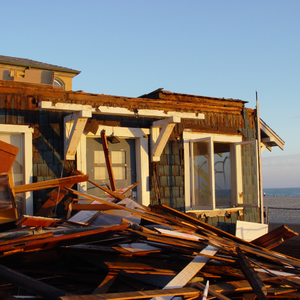
Selling without repairs is completely legal. Selling without disclosure isn’t.
An as-is clause doesn’t erase what you knew. Buyers in Texas can bring fraud claims, which carry a four-year limitations period under Civil Practice and Remedies Code § 16.004. Deceptive Trade Practices Act claims run two years from when the buyer discovered, or should have discovered, the problem. I’ve seen both clocks start well after closing under the discovery rule. Write down what you know and put it in the disclosure. If a buyer finds a leak after closing, here’s how sellers address undisclosed water damage in Texas real estate transactions.
My blunt opinion is that sellers who over-disclose almost never get sued, while sellers who get cute with the word “repaired” often do. If a contractor patched a roof leak without replacing the decking, say exactly that.
Pricing as-is works when you price against honest post-storm comps. Investors and cash buyers work backward from after-repair value, then subtract their scope and a margin. You can compare that offer against two or three other buyers in an afternoon.
A landlord out in Mesquite called me one Tuesday, worn out from chasing rent on a duplex he’d inherited from a business partner and never wanted. Wind had peeled part of the back roof the spring before. His last tenant had moved out two months earlier. The garage held nothing but a dead riding mower and a stack of unopened renewal notices. He didn’t want top dollar for a renovated building. He wanted the thing off his plate before another storm season, and a straightforward cash close got him there.
Frequently Asked Questions
Who Pays for Storm Damage to a Texas Home?
Your insurance carrier pays for covered perils, minus your deductible, and which policy responds depends on what caused the damage. Wind and hail come from your homeowners policy inland or a separate windstorm policy on the coast. Rising water is covered only by flood coverage. If the damage is excluded or falls below your deductible, the cost lands on you as the owner. Buyers almost never pay for damage that happened before closing unless you negotiated a credit instead of repairs.
Do I Have to Disclose Mold Remediation When Selling a House in Texas?
Yes, and I’d disclose it even if you think the issue is fully resolved. The state form asks about known water damage, previous repairs, and conditions affecting the property, and mold remediation falls squarely inside that. Please attach the remediation company’s certificate and scope of work to the notice. Documented remediation reassures buyers. A vague answer invites buyers to assume the worst and lower their offer.
How Long Can a Buyer Come After Me After Closing in Texas?
Longer than most people guess, because the clocks described earlier can start when the buyer discovers a problem instead of on closing day. Fraud claims and consumer protection claims carry different windows. A concealed defect found two winters later can still land you a demand letter. Your best defense is paper: a signed disclosure that names the damage, plus the invoices, photos, and inspection reports you handed over. Buyers who got the full story rarely have a case worth filing.
Can I Sell a House with an Open Insurance Claim in Texas?
You can, and it happens constantly after hail season. The question is who collects the claim proceeds and how the lender handles it. Many carriers won’t transfer a claim to a new owner. The usual fix is to assign the proceeds at closing, or to close the claim, take the payout, and sell the property as-is. Tell the title company early. An unresolved claim found two days before funding is how clean closings turn into delayed ones.
Will a Mortgage Lender Approve a Loan on a Storm-Damaged House?
Usually not until the damage is repaired, at least for conventional, FHA, and VA financing. Appraisers flag active roof leaks, missing shingles, compromised structure, and standing water, and underwriting then demands repairs before funding. That’s why so many damaged houses end up with cash or renovation-loan buyers. If your roof is tarped and your drywall is open, assume the financed buyer pool shrinks dramatically.
Should I Repair the Roof Before Selling or Sell As-Is?
Run the math both ways before you decide. A new roof with transferable paperwork often returns most of its cost and reopens the financed buyer pool, which matters if the rest of the house is in good shape. Now picture the roof as one item on a list that includes flooring, drywall, HVAC, and a kitchen from 1987. Fixing only the roof leaves you with a damaged home and a nice roof, and that’s where selling as-is tends to win.
Ready to Sell Your Storm-Damaged House in Texas?
If you’re sitting on a storm-damaged house in Texas, you may not want to spend the next six months managing contractors and adjusters. It’s worth knowing what a straightforward as-is sale would look like for your specific property. There’s no obligation, and you won’t pay for repairs. Reach out to Ready House Buyer when you’re ready, compare it against your other options, and pick whichever one gets you where you want to go.
Helpful Texas Blog Articles
- Difference Between Title and Deed
- How To Prevent Squatters From Taking Over Your Property
- Can I Sell My House If My Spouse Is In Jail In Texas
- How Long After an Appraisal Can You Close in Texas
- Tax Implications of Selling a House Below Market Value in Texas
- How Long Can a Seller Stay in the House After Closing
- How to Find a Realtor in Another State
- Do You Get Any Money if Your House is Foreclosed?
- Selling Shares of Your Home for Immediate Cash Access
- Selling a Storm Damage House in Texas Fast for Top Dollar