
Most people who move to Texas have the weather in mind before they have a neighborhood in mind. They picture wide open skies, that particular West Texas light spreading flat across the desert, and the kind of sun that makes your Saturdays feel longer than they have any right to feel. They’re right to think that way, and the sunniest cities in Texas back it up. Covering so many climate zones, the Lone Star State makes “sunny” mean completely different things in El Paso versus Galveston, and picking the wrong city for your lifestyle is a mistake that takes years to undo.
What Makes a City the Sunniest in Texas?
Raw sunshine hours are only part of the story.
Sunlight percentage measures the average annual portion of time between sunrise and sunset that sunshine reaches the ground, and that number matters far more than a simple count of “sunny days.” A city that sees eight hours of blinding morning sun before an afternoon cloud cover every single day will rank differently than one with diffuse, all-day brightness. Elevation plays a surprisingly decisive role here. Most of America’s sunniest cities are clustered in the dry, high-pressure climates of the Southwest, and Texas’s sunniest corners share the same geography: high desert plateaus where moisture from the Gulf of Mexico simply can’t reach and where cloud formation is rare.
Clouds need moisture to exist, which is why humidity matters. Get far enough west in Texas, cross past the Pecos River, and the air dries out fast. The Franklin Mountains near El Paso block moisture, the desert floor bakes, and the sky stays clear almost by default. Compare that to the Gulf Coast, where warm, wet air rolling in off the Gulf creates persistent low cloud cover throughout the winter months, and you start to see why two Texas cities just 700 miles apart can feel like they’re on different planets.
A few years back, I spent a week in the Kern Place neighborhood of El Paso, just north of the University of Texas at El Paso, helping friends clear out their mother’s house after she moved into assisted living. They were emptying a four-bedroom house on a Thursday, and the garage was still packed with decades of furniture they couldn’t face sorting through. That entire week, the sky never had a single cloud in it. That’s El Paso’s normal.
Which Texas Cities Get the Most Sunshine Every Year?
El Paso logs around 3,763 sunshine hours annually, placing it fifth among all U.S. cities and making it the undisputed sunshine leader in Texas. No other Texan city even comes close to those numbers. El Paso is sometimes called “The Sun City,” and its semi-arid climate keeps its weather dry and sunny year-round.
Situated along the Rio Grande in the Chihuahuan Desert, El Paso enjoys more than 300 sunny days per year, which puts it well ahead of the U.S. average of around 205 sunny days. To put that in perspective, Yuma, Arizona, leads the entire country with 4,015 sunshine hours annually, and El Paso is chasing that number more closely than any other Texas city. West Texas, in general, deserves more credit than it gets from people who write it off as just flat and hot. Driving out there to look at properties for the first time, I immediately noticed how the openness of those landscapes, the Franklin Mountains rising out of the desert, and the clarity of that high-altitude air create some of the most reliably brilliant skies in the entire country.
Austin, the Live Music Capital of the World, surprises people when they check its actual sunshine data. Austin records around 2,645 sunshine hours per year, which is respectable but reflects the reality that Central Texas sits close enough to Gulf moisture to get more cloud cover than the sunny reputation suggests. San Antonio falls into that same band. Dallas comes in at around 2,871 annual sunshine hours, per long-term climate records, with July being its brightest month by far.
Texas Regional Breakdown: Where the Sun Shines Most
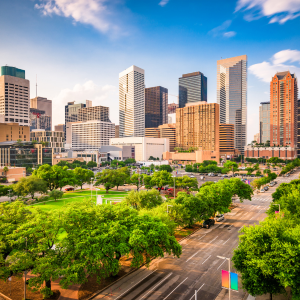
Buy in the wrong part of Texas, thinking you’re getting desert sunshine, and you might find yourself living under Gulf Coast overcast from November through March. It’s a real trade-off, and most relocation articles skip right past it.
West Texas is the clear winner. Midland-Odessa comes in at 74% annual sunshine percentage, Amarillo at 73%, and Lubbock at 72%, according to NOAA climate data rankings. These Panhandle and West Texas cities share the same high-desert, low-humidity air mass that keeps the skies open. The sun shines all the time in Lubbock, and the city’s annual sunshine hours actually exceed San Diego’s total, which might be the most underrated climate fact in the whole state. Lubbock doesn’t get the press it deserves.
Central Texas falls into the middle of the pack. Abilene clocks in at around 70% sunshine annually, sitting right on the transition zone between the arid west and the humid east, so it gets the best of both worlds on most days. The Hill Country towns west of San Antonio, places like Kerrville and Fredericksburg, share that same semi-arid profile without the blasting summer heat of the far west, which makes them worth a closer look if you’re buying for long-term livability.
The Gulf Coast and Southeast Texas lag behind. Galveston gets about 62% sunshine annually, while the Dallas-Fort Worth area comes in at around 61%. Houston sits at 59%, dragged down by persistent Gulf moisture that produces that famous low-lying morning overcast even in summer. Coastal beauty has its price, and in Southeast Texas, that price is paid in cloudy days and higher insurance premiums.
Full Ranked List of the Sunniest Cities in Texas
If you’re sitting across from me and asking which Texas city gives you the most sun for your money, here’s the honest rundown, from brightest to haziest:
- El Paso (Sun City, West Texas): roughly 3,763 hours annually, 84% sunshine rate
- Midland-Odessa (Permian Basin): 74%
- Amarillo (Texas Panhandle): 73%
- Lubbock (South Plains): 72%
- Abilene (Big Country): 70%
- Galveston (Gulf Coast): 62%
- Dallas-Fort Worth: 61%
- Austin / San Antonio: 60% each
- Brownsville / Corpus Christi: 60%
- Houston: 59%
The statewide median Texas home price sat at $335,000 in 2025, according to the Texas REALTORS® Year in Review report, but that figure hides huge variations by city. Midland and Odessa are more affordable than Austin by a wide margin, which means buyers who prioritize sunshine over urban amenities get a double reward: more sun and more purchasing power. If you’re thinking about selling a home in one of these markets and want a quick read on your specific neighborhood’s value (something I always do before committing), Ready House Buyer is a good first call before you commit to any path.
What Time of Year Is the Sunniest in Texas?
Rankings above tell you where to live, but when you actually live there, the calendar matters just as much.
Summer is the obvious answer, but summer in Texas is complicated. In El Paso and West Texas, June is the peak sunshine month, with nearly 12 hours of sunlight daily before the brief monsoon moisture arrives from the Gulf of California in July and August. Those summer thunderstorms are localized and dramatic when they hit, but they clear fast. High desert terrain rebounds within hours.
Central Texas peaks in the heart of summer. Austin sees its brightest month in July, averaging 317 sunshine hours. Spring in the Hill Country, particularly April and May, gives you the famous wildflower season along Highway 16 south of Kerrville, brilliant skies, and temperatures still mild enough to enjoy being outside without effort. This stretch is genuinely hard to beat anywhere in America, and I’ve driven a lot of it scouting properties.
Winter divides the state sharply. El Paso still pulls respectable sunshine through December and January because its desert climate doesn’t generate the cloud cover that blankets Dallas and Houston. According to the National Weather Service, Austin typically gets sunshine about 50% of the time in winter, which is honest but noticeably grayer than the summer experience most people picture when they’re planning a move there.
How Texas Sun Hours Compare to the Rest of America
A woman selling her house in Georgetown last spring told me she’d moved from Portland, Oregon, specifically for the sun. She’d lived in Texas for seven years and still couldn’t believe how bright March was. This reaction is common, and the data backs it up.
Texas ranks fourth among all U.S. states in annual solar energy, trailing only Arizona, New Mexico, and Nevada. This puts it ahead of California, Colorado, Florida, and the entire eastern half of the country. Florida carries the “Sunshine State” nickname, but Florida’s reputation doesn’t translate into dominance on the actual rankings; Miami and Tampa rank highly, but fewer Florida cities make the top twenty than California cities do. Texas is quietly sunnier than most Americans assume.
The statewide median days on market rose to an average of 67 days in 2025, a week longer than the prior year, which tells you the Texas housing market has cooled from its pandemic-era frenzy. This is good news for buyers coming from sunnier-climate wish lists who now have time to be selective. As of June 2026, Texas homes were selling at a median price of $347,911, holding relatively steady despite broader softening (a number that would’ve seemed impossible in 2021). For sellers trying to read that market, Ready House Buyer works with homeowners across the state’s sunniest markets and can give you a direct offer without the 67-day wait. If you’re looking for Texas cash buyers, this can be an alternative to waiting for a traditional sale.
Compared to the Pacific Coast, only El Paso outranks California’s sunniest cities on raw sunshine hours. Sacramento at 3,608 hours and Fresno at 3,564 both clear what Dallas, Austin, and Houston record. Move inland, and Texas gives up ground to spots like Pueblo, Colorado, and the high desert of northern Arizona on extreme sunny-day counts. Las Vegas edges out even El Paso, logging 3,825 sunshine hours a year against El Paso’s 3,763. But no state gives you the same combination of sunshine, land size, urban variety, and price point that Texas does. This matters when you’re buying a home, not just a weather forecast.
The Cloudiest Cities in America Vs. Texas Sun Totals
Does Seattle really get that much less sun than Houston? People ask that all the time, and the gap is bigger than most expect.
Seattle averages around 2,170 sunshine hours annually. Houston, often dismissed as the gloomy Gulf Coast option, still beats that by roughly 400 hours per year. Even the haziest Texas cities outperform almost everything in the Pacific Northwest and Great Lakes regions. The contrast with cloudiest-in-America contenders like Juneau, Alaska, which ranks at the very bottom of the NOAA sunshine percentage list at just 30%, is almost comical from a Texas perspective (I’ve visited both states in January).
What Texas buyers sometimes miss is that cloud cover in Houston and Galveston is highly seasonal. Summer along the Gulf Coast is quite sunny, with long, bright days from June through September. The gloom concentrates in winter, when Gulf moisture pushes low cloud formations inland across Southeast Texas. Buy in Galveston or Clear Lake City, and you’re signing up for brilliant fall weekends by the water and genuinely gray Januaries. This is a trade-off worth knowing before you close. If you already own on that side of the state and the gray season has worn you down, we buy houses in Houston, TX in any condition.
As of March 2026, Texas carried about 141,519 active listings, which is the highest inventory the state has seen in years. Buyers in even the cloudier Texas metros have real leverage right now. Sellers in those same markets should price carefully rather than anchor to 2022 comparables, which, in my experience, are the first numbers nervous sellers grab when they’re trying to justify a high ask.
How to Read an Hourly Sunshine Forecast for Texas Cities
For years, I paid almost no attention to hourly sunshine forecasts and relied entirely on the monthly averages. That’s the wrong approach, especially in Texas, where microclimates change within a single metro area.
Most major weather platforms, including the NOAA Climate Data Online portal for individual stations like El Paso International Airport, publish hourly sky cover observations going back decades, alongside monthly and annual sunshine summaries. The National Weather Service in El Paso maintains city-specific climate reports you can pull at any time. These resources give you actual historical sunshine records broken down by month, not just general descriptions. For Texas cities specifically, that monthly breakdown matters because the difference between July and January can be a lot, even within the same city, something I’ve confirmed by pulling station data before closing on properties in different regions.
An hourly forecast shows you the cloud cover percentage by hour of the day. In West Texas, mornings are almost universally clear, and the pattern holds through the afternoon. In Central Texas, summer afternoons spike with storm probability after 3 p.m., then clear by evening. Knowing that distinction changes how you think about a backyard, a solar panel installation, or a commute. A house with a west-facing porch is a liability in Midland at 4 p.m. in August and a paradise everywhere else (I’ve watched that sun cook a concrete slab).
One couple I worked with in the Circle C Ranch area of Austin had been tracking weather apps for six months before they decided to sell. They were splitting assets in a divorce and had already agreed on terms; they just needed the house handled on a Friday without complications. The garage was full of outdoor furniture from years of entertaining in that Central Texas sun (patio sets, chimineas, the works). They picked a direct sale because a 67-day market listing didn’t fit their timeline, and we closed it cleanly. That’s the kind of situation where reaching out to Ready House Buyer just makes more sense than a traditional listing.
Paying attention to real climate data from authoritative sources like the KXAN weather team’s NOAA-sourced city rankings saves you from making a decision based on vibes. Texas has real sunshine to offer. The right part of the state depends on your preferred lifestyle within it.
Frequently Asked Questions
What City in Texas Has the Best Weather Year-round?
El Paso earns that title for most sun-seekers, with mild winters, low humidity, and over 300 sunny days per year. If heat is a concern, the spring and fall months are genuinely spectacular there, with mild temperatures and clear skies that stretch all the way to the Franklin Mountains. Abilene and Midland are strong alternatives if you want that same dry, bright climate with a slightly smaller city feel.
What Part of Texas Doesn’t Get Too Hot?
The Hill Country region around Kerrville and Fredericksburg sits at a higher elevation than the surrounding plains, which trims a few degrees off summer highs and creates cooler nights. Amarillo in the Panhandle also runs cooler than most of the state due to its elevation and northern latitude; it’s one of the few Texas cities where you’ll actually need a winter coat for more than a few weeks a year. Both areas still give you well above-average sunshine without the extreme heat of the far western desert.
Which City in Texas Has the Best Climate to Live In?
Climate preference is personal, but San Antonio consistently ranks well for balance. It sits in the transition zone between humid and semi-arid, giving you warm winters, bright springs, and around 220 days with some sunshine each year without the brutal summer heat of El Paso or the Gulf humidity of Houston. The Alamo City’s proximity to Hill Country hiking and the San Antonio River Walk means outdoor living is genuinely built into the culture there.
What City in Texas Has the Best Quality of Life?
Quality of life pulls in more factors than weather, but cities in the sunniest tier of Texas tend to show up well in livability rankings. Austin draws tech workers and creatives to its neighborhoods like South Congress and Mueller, though its median home price of around $540,000 as of late 2025 puts a real strain on affordability. San Antonio offers comparable sunshine and urban culture with a much lower cost of entry, making it the stronger overall value for buyers who want quality of life without overpaying for it. Owners heading the other direction can talk to cash home buyers in Austin, TX before they list.
If you own a home in any of these sunny Texas markets and you’re trying to figure out what to do with it, whether you’re relocating, dealing with an estate, or just ready for something different, we’re happy to talk through your options. No pressure, no obligation. Reach out to Ready House Buyer whenever you’re ready, and we’ll give you a straight answer about what your property is worth and what makes sense for your situation.
Helpful Texas Blog Articles
- Sell a House When You Owe More Than It’s Worth in Texas
- Taxes When Selling an Inherited House in Texas
- How to Choose a Title Company in Texas in 2026
- Home Sale Contingency in Texas
- What Happens if a House is Damaged Before Closing
- Can You Pause Mortgage Payments While Selling Your Texas Home
- How Selling A House With A Mortgage Works In Texas
- How Long Does a Texas Real Estate Contract Last?
- Do Termite Bonds Affect Home Sales In Texas
- Can You Go Without Paying Property Taxes On Your Texas Home
- Can A Seller Refuse Repairs After Inspection
- How To Sell Your House During A Divorce In Texas
- Can Medical Bills Take Your House in Texas
- Sunniest Cities In Texas
- Texas Eviction Process Explained